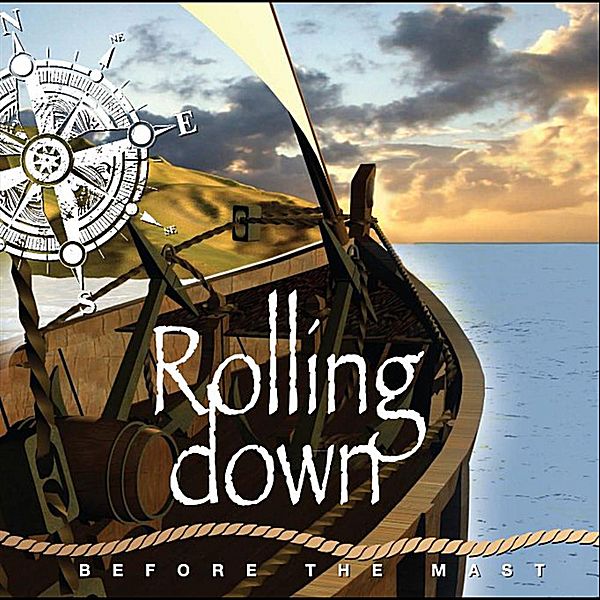
Shanties - Heave Away/Haul Away

The origin of the word shanty or chanty is uncertain. Some suggest that the term comes from the boat-songs, called “chasons” sung by the French voyageurs in early North America. Others believe it is simply derived from the English word “chant”, while others believe it can be traced back to the huts or “shanties” where sailors congregated to drink and carouse along the coasts of the American South and the West Indies. Perhaps the most widely held belief is that the term shanty comes from the French word “chanter (to sing)”.

Whatever the origin of the term, shanties were sung by sailors to provide a rhythm and beat to their work so that many hands could work together to accomplish difficult tasks on board sailing ships. When these were long tasks requiring many men, such as hoisting the topsails or warping a ship out into the channel, long-haul or halyard shanties were sung. Short-haul shanties provided the pulse needed for the short, forceful pulls required to do something like haul in the bowline. Capstan shanties were sung when work, such as hauling in the anchor, required the crew to heave away together against the capstan bars. These capstan shanties often doubled as pumping shanties as sailors often had to work the pumps to keep their ships afloat. However, when members of the crew were off watch, they often sang fo'c's'le (forecastle) songs or shanties (forebitters) which were sung simply for entertainment and solace.

_______________________________________________________

'Come men, can't any of you sing? Sing now and raise the dead.'

Life and Strength into Every Arm

"A song is as necessary to sailors as the drum and fife to a soldier. They must pull together as soldiers must step in time, and they can't pull in time, or pull with a will, without it. Many a time, when a thing goes heavy, with one fellow yo-ho-ing, a lively song, like "Heave, to the girls!" "Nancy O!" "Jack Crosstree," "Cheerly, men," &c., has put life and strength into every arm."
- Richard Henry Dana, Jr., Two Years Before the Mast (1840)


Singing Out at a Rope

"...I soon got used to this singing, for the sailors never touched a rope without it. Sometimes, when no one happened to strike up, and the pulling, whatever it might be, did not seem to be getting forward very well, the mate would always say, 'Come men, can't any of you sing? Sing now and raise the dead.' And then some one of them would begin, and if every man's arms were as much relieved as mine by the song, and he could pull as much better as I did, with such a cheering accompaniment, I am sure the song was well worth the breath expended on it. It is a great thing in a sailor to know how to sing well, for he gets a great name by it from the officers, and a good deal of popularity among his shipmates. Some sea captains, before shipping a man, always ask him whether he can sing out at a rope."
 
-Herman Melville, Redburn, chapter 9 (1849)

As one writer puts it, "a real seaman of the days of sail wouldn't pick up a rope-yarn without raising a song".
-Stan Hugill, 'Shanties from the Seven Seas'


Modify Website

© 2000 - 2012 powered by
www.doteasy.com